Drumstick Lentil Curry | Murungakkai Parrupu Kulambu | South-Indian Drumstick Dal | Drumstick Sambar
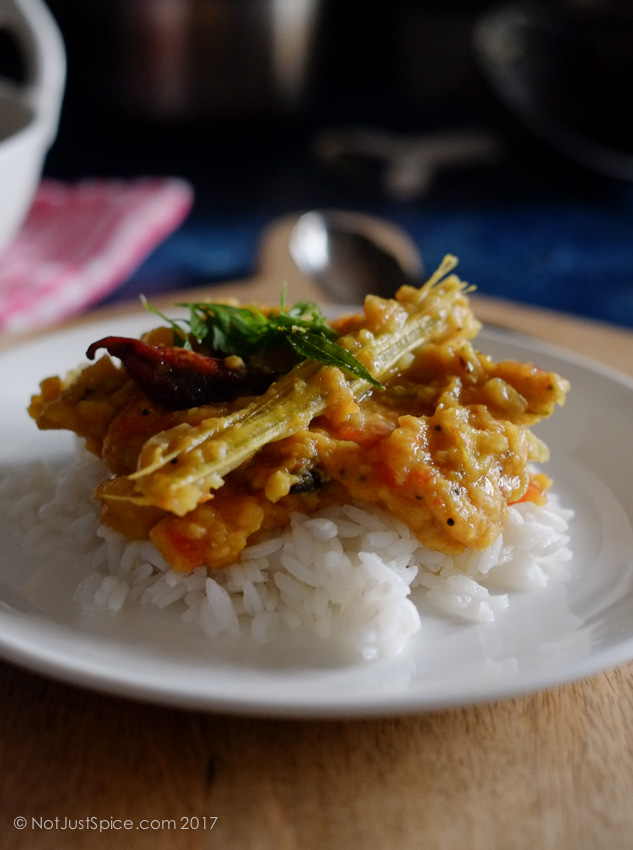
Dal, lentil curry, sambar and parrupu kulambu lovers: rejoice! For unto you is presented the king of lentil curries: the drumstick lentil curry. You shall find it more creamy, nutritious and glorious than just plain dal. Follow this recipe and you shall find great joy!
’Tis true! Drumstick — the immature seed pods from the moringa tree or drumstick tree — adds its unique flavour and richness and makes for a finger-licking murungakkai parrupu kulambu. The moringa tree is sometimes called a miracle tree as almost every part of the tree is used to make nutritious food; the leaves, flower, seeds, fruits, roots and bark. Drumsticks, even when cooked by boiling, remain high Vitamin C, and are a good source of dietary fibre, potassium, magnesium and manganese. You’ll have to open it up to reach its creamy goodness. I usually scrape out the creamy pulp and mix it along with the dal and rice, and chew the outer skin in the end.
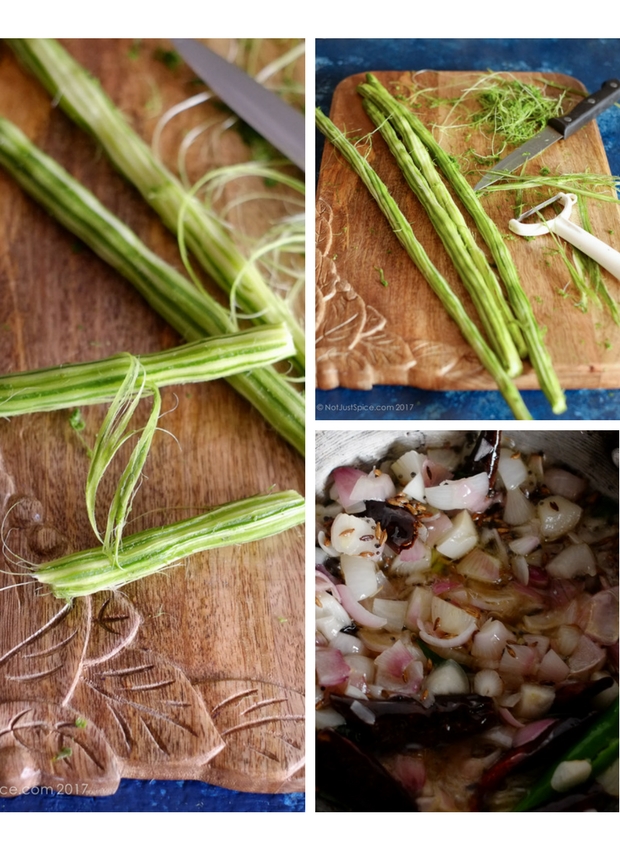
Whenever my father brought home drumsticks, he would also bring along drumstick leaves. I’d always eat up all my murungakkai parrupu saadam, but reluctantly eat the bitter drumstick leaves stir fry (I now like them, knowing how nutritious they are). I’d painstakingly remove the pulp from the drumstick chucks and mix it in with the dal and rice — it added a creamy texture and a glorious taste to the already divine drumstick sambar. Oh how i loved it (still do)! I’d then proceed to slowly chew the all but empty husks, slowing sucking them dry of their glorious flavour. Those lunches would take a while (still do)!
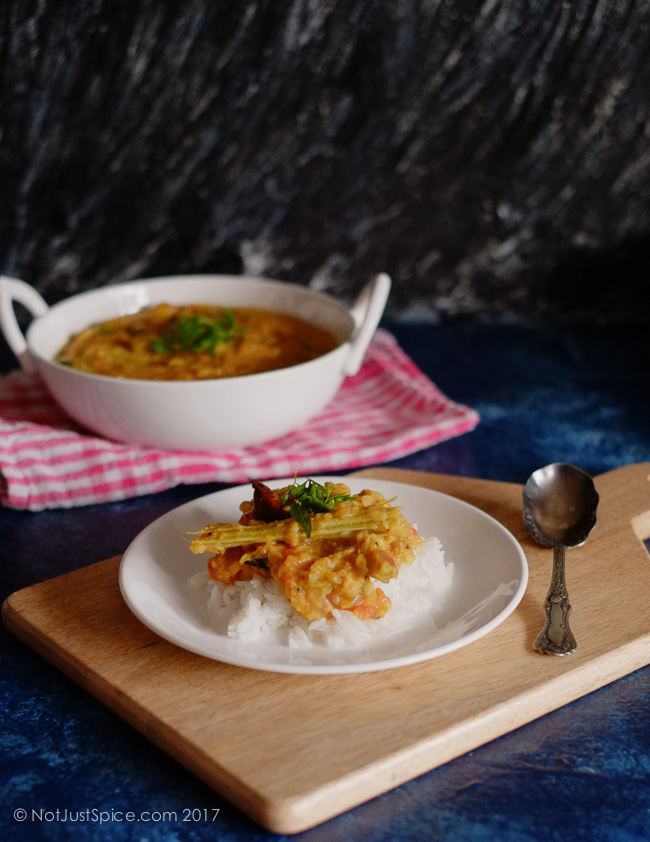
Eating this drumstick lentil curry today brought back memories of those lazy summer days (when schools on India are closed) when lunch times were endless, and the meals were made by our mothers and fathers unhurriedly, and were therefore more tasty. I would stuff myself full! And then somehow manage some space for mangoes!
Serve it with hot rice, or dosais, or even quinoa or buckwheat if you wish. You could even serve it with this quick finger millet wheat dosai. If you’re eating it hot, add a dash of ghee or butter atop and get ready for an intense flavour! If you don’t have shallots, the regular red onions will do, and if you do not have tamarind, just add two more small tomatoes. Usually I also add a fistful or two of mung dal to the toor dal. You can add two fistfuls of mung dal (if you have them in your pantry) to a measuring cup and fill it up with toor dal.
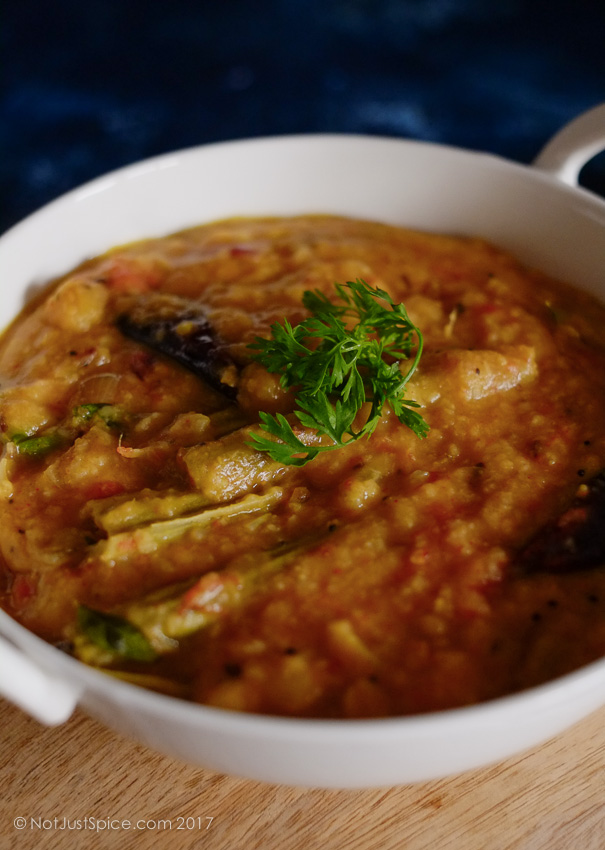
Any oil with a high smoking point can be used. Typical Tamil cuisine uses sesame oil or groundnut oil.If you don’t have shallots, the regular red onions will do, and if you do not have tamarind, just add two more small tomatoes. Usually I also add a fistful or two of mung dal to the toor dal. You can add two fistfuls of mung dal (if you have them in your pantry) to a measuring cup and fill it up with toor dal.
Related Links:
Drumstick (CoffeeandVanilla)
Moringa Tree (Wiki)
Tempering (Wiki)
Mung Dal (Wiki)
Ingredients
Ingredients
To Temper
Instructions
- 1Rinse the split pigeon pea and soak it in water for half an hour. Also soak the ball of tamarind in a cup of water.
- 2Meanwhile you can peel the onions and garlic and drumsticks. For the drumsticks, you can use a peeler or a knife. If you’re using a knife, you will have to place the drumstick flat on your cutting board, hold it down with one hand and wielding a knife in the other, scrape the peel away, either with strokes in the same direction or both directions. Like you were sharpening a knife. You could hold the drumstick in your hand, and place the tip on the cutting board instead of the entire vegetable on the cutting board. Then cut it up into 2- or 3-inch pieces.
- 3Roughly chop the onions and tomatoes, and drain the toor dal.
- 4Place a heavy bottomed vessel or a pressure cooker on medium heat and add to it the soaked and drained toor dal.
- 5Add three cups of water, the chilli powder, salt, and the tomatoes and garlic.
- 6Cover and cook until it is half cooked.
- 7Open the lid and add the cut up drumsticks. Close the lid and cook until both the drumsticks and the toor dal are cooked. Once it cooks, gently remove the drumsticks and mash the cooked toor dal with a ladle. If your have become soft, skip this step as moving them around will break them.
- 8While the drumstick lentil curry is cooking you can get the remaining ingredients ready for tempering.
- 9Heat the oil in a small kadai or wok or frying pan, and once it get hot, add the mustard seeds.
- 10Once they crackle, add the fenugreek seeds, cumin seeds and dry red chillies.
- 11Sauté for 15 seconds and add the onions, curry leaves and green chilly.
- 12Fry until the onions are light pink, then add the ginger garlic paste and let it fry for a minute.
- 13Add the coriander powder, fenugreek powder, asafoetida powder, and turmeric powder. Sauté for a few minutes.
- 14Add the tamarind water to this fragrant tempering, and let it come to a boil.
- 15After a few minutes pour this boiling mixture into the hot drumstick lentil curry.
- 16Gently mix it about, sprinkle the coriander leaves on top, and cover and let rest for 15 minutes.
- 17Serve hot with rice. You could add teaspoon of ghee or butter to enhance the flavour. Mmmmm… yummy murungakkai parappu saadam.
Notes
Any oil with a high smoking point can be used. Typical Tamil cuisine uses sesame oil or groundnut oil.If you don't have shallots, the regular red onions will do, and if you do not have tamarind, just add two more small tomatoes. Usually I also add a fistful or two of mung dal to the toor dal. You can add two fistfuls of mung dal (if you have them in your pantry) to a measuring cup and fill it up with toor dal.