Finger Millet Balls | Màu Sadam | Ragi Muddè | Ragi Kali | Ragi Balls
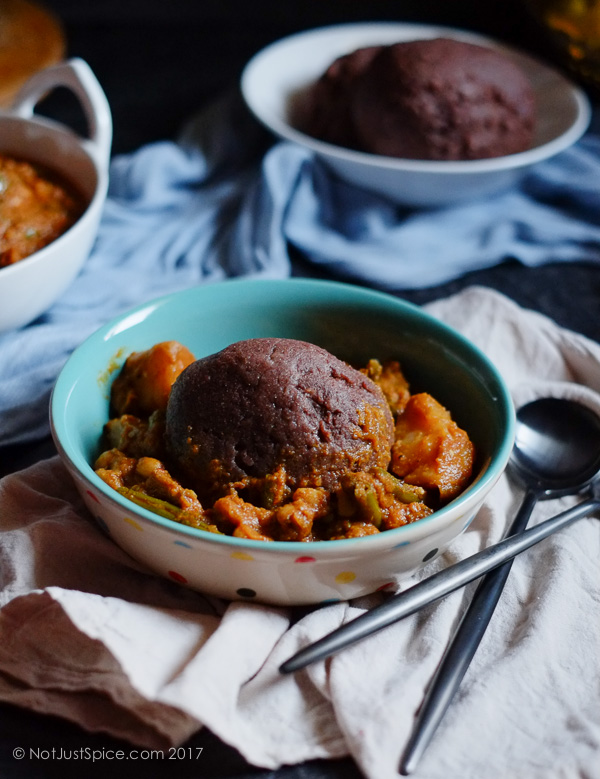
Grandmothers. What a wave of memories that one word washes up the shores of our mind! And unlike our memories with everybody else, memories of our grandmothers are always good: there’s indulgence, TLC, great cooking (years of honing and experience), knowledge, guidance and most of all, patience with us rowdy little beings.
I am fortunate to have experienced love from both my grandmothers. This particular dish I always associate with my paternal grandmother, Papan. It’s the name I gave her when I was just learning to talk — syllables from her name really — when I was asked to go fetch her. My aunt used her name, and I couldn’t quite get all of it to roll down my tongue, and I stuck to what could. And so, Papan was born.
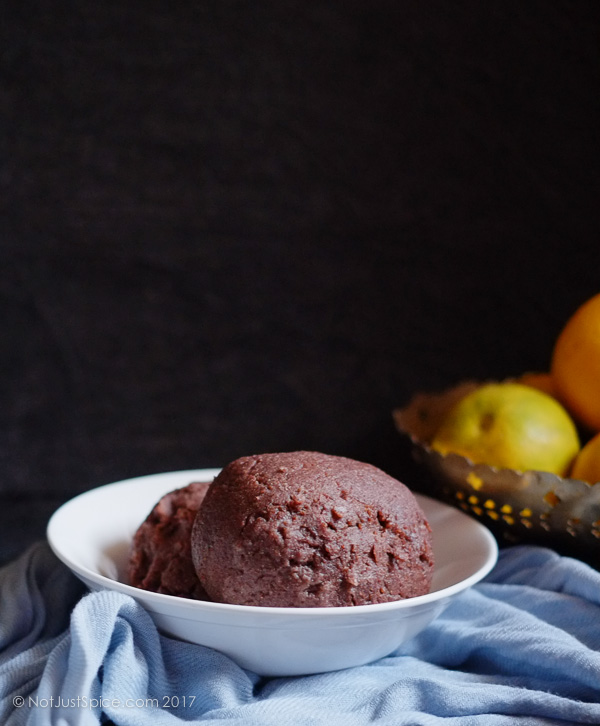
I loved pulling on her crinkly pale brown skin on the back of her hand and watching it stand for a millisecond before it went down, listening to her elaborate stories while she fed me, and hated the neem leaf balls she made me swallow in the mornings and how dangerously close to the smoking sambrani she’d hold my head. Few things take me back; most of all it is ragi kali that takes me back to her every time — it is such a big part of our diet even now.
The super grain kezhvaragu, or ragi, or finger millet, is one of the few natural sources of Vitamin D, and a great source of calcium, iron, good carbohydrates, and Vitamin C (found in sprouted ragi), and helps you battle anemia, saggy skin and weight gain. This super grain makes a few of South India’s staple foods: ragi kanji (finger millet porridge), ragi puttu (finger millet steamed cake) and ragi kali or ragi muddè (finger millet balls).
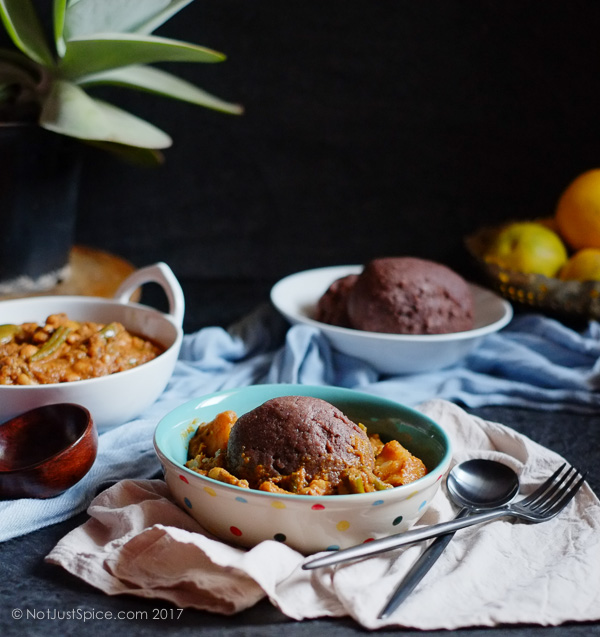
Like any other food made with grains and starch, and then cooked with other grains and seasonings or cooked as is — like polenta, rice and risotto, pasta, chappattis, bread, roast potatoes, gnocchi, couscous, and semolina — ragi balls are eaten along with a gravy, curry (that oh-so-not-Indian word!), stew, chutney, or a sauce — just about any liquidy food made from vegetables or vegetables and meat. And the spicier, the better! You see, màu sadam or finger millet balls have a unique yet subtle flavour that blends so well with the sauce you’re eating it with, that you tend to forget it is sometimes there. More so because the little pice of ragi ball in your mouth is smooth and doesn’t require chewing. You’re only going to chew the vegetables or the meat while the ragi muddè glides down your tongue like a royal being in silken robes.
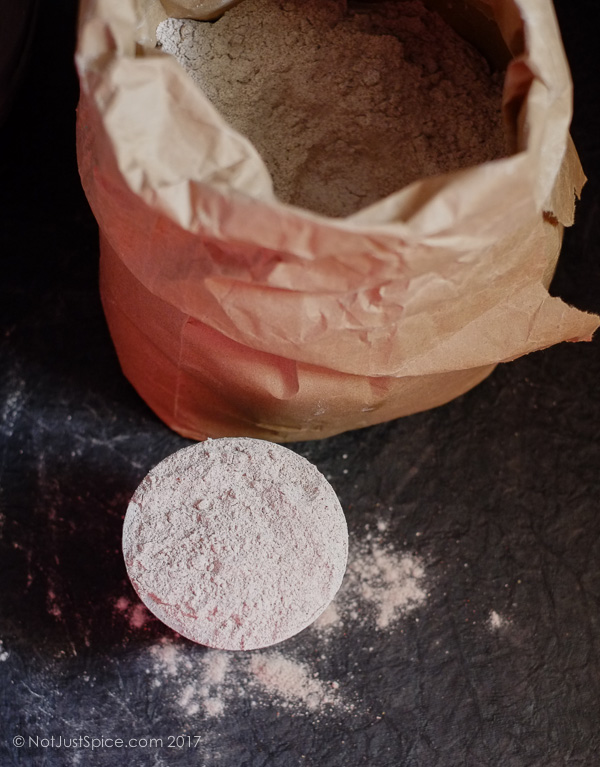
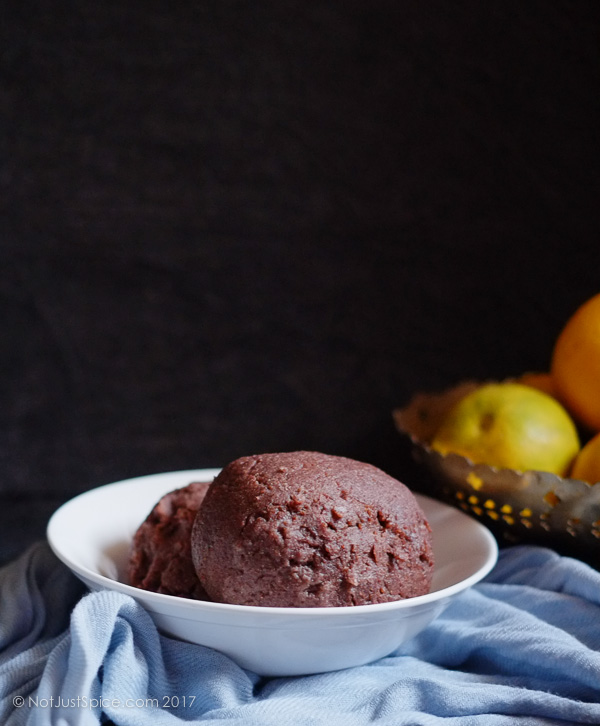
It may sound simple: finger millet balls or ragi balls — surely it must be easy to make? Not really. Like pasta, it takes patience and effort, but it’s worth the wait both because it is a super food and because its nutty taste and aroma are rich. After you boil it, you bring it all together with a thick wooden stick (mara karandi or ragi kôlu) while giving your arms a bit of a workout. Papan would squat and face a wall, stick out her legs (while bending her knees) and hold the ragi kali pot with her feet against it to steady it (of course with a thick kitchen towel to protect her feet from all the heat and steam), then bend over with the wooden stick and start mixing the thick cooked ragi dough much like rower coming forward to make a stroke. It required strength and skill and I loved that she’d put that much effort making it. She’d then make it into meal-sized balls for each person in the house. I’d usually plonk myself beside her and wait till she gave me a little piece with ghee (ragi and ghee together are a treat!). I’d bounce the hot piece from hand to hand while blowing on it and swallow the still hot piece with a squeal of delight.
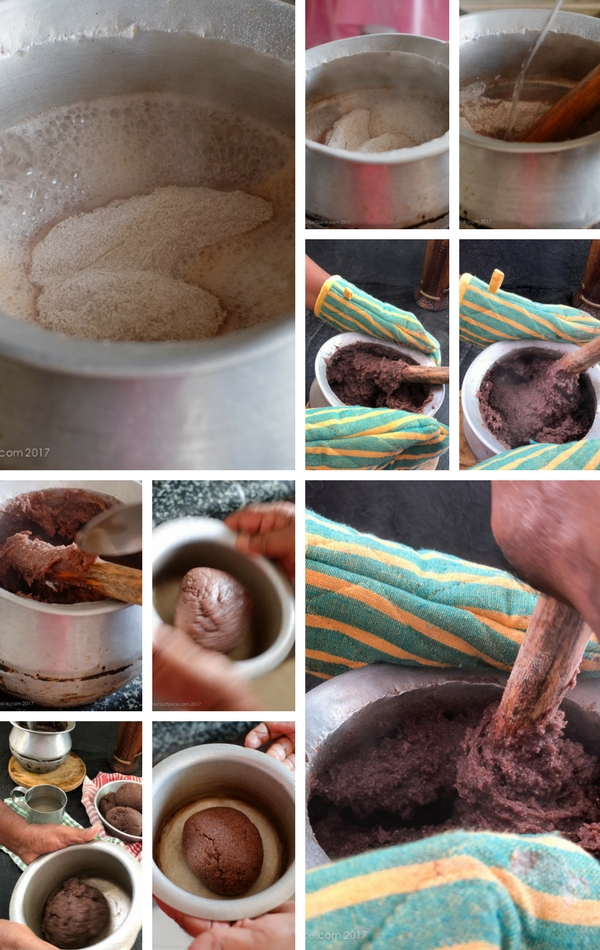
My father makes it now, and because his joints don’t permit him to sit down and make it like his mother, one of us helps steady the pot while he works the wooden stick and makes the ragi balls. First time users can start off by making a little and hold the pot with one hand while you use the long handle of a wooden spoon to mix the dough with the other hand. Holding it against a wall or wedging it between your food processor and wall and then holding it (which is what I do sometimes; I squat the other times) helps steady the pot further. Funny how we become so much like our ancestors when we cook, right? I mean, we may write differently or chop wood in our own way, or dress up differently from our parents and grandparents, but the minute we roll up our sleeves and start cooking, we become them. And so it is, every time I make these finger miller balls, I become her, just like I see her in my father when he makes them.
It is a wonderful thing really, to eat this super food and know how deeply nourishing it is. Plus you really do work up an appetite while make it (which is why you must make it just before you eat, right after you’ve made the gravy or chutney). Kali is best eaten when it is hot; it is at that stage silken; it hardens as it cools, much like pasta or rice or chappati. A little will go a long way — it fills you up and keeps you going on its energy for a long time. It’s a great workout food, and it’ll also help you get your strength back when you’re recuperating. A little will go a long way — it fills you up and keeps you going on its energy for a long time. It’s a great workout food, and it’ll also help you get your strength back when you’re recuperating. Much like the memory of your grandmother.
You can dip it in or pair it with a variety of chutneys, sides and gravies like:
Easy Peasy Onion Tomato Chutney
The Real Quick and Easy Chicken Curry
Chicken Pepper Fry | Pepper Chicken
Here’s another finger millet preparation you can try: quick finger millet wheat dosa. Do let me know if you liked these finger millet balls by using the hashtag #notjustspice on Instagram or Facebook.
Related Links and Recipes:
6 Health Benefits of Ragi: A Wonder Grain (NDTV FOOD)
Benefits of Ragi (The Times of India)
Finger Millet (Wikipedia)
Ingredients
Instructions
- 1Heat 3 cups of water in a deep pot, and add to it rice and salt. Since this yield 6 ragi kalis, you may want to reduce the flour to 1/2 cup and the water to 1 cup if you want 2 balls.
- 2Allow it to simmer for 5 minutes.
- 3Add the kezhvaragu flour to the boiling water and let it simmer for a further 10 minutes. Do not mix.
- 4Now insert the long and thick handle of a wooden spoon or ladle through the cooking dough, and let it cook for 5 more minutes. Cover the pot — the wooden spoon will not allow you to fully cover it. Do not mix; the ragi flour will cook. You can see in the collage how the top part is left as is. The water boils over it and cooks it.
- 5In the meantime, bring a kettle of water to boil — so you have hot water to add to the dough later. You’ll also need a small bowl of cool water and and round vessel or bowl.
- 6Turn off the heat after the finger millet flour has been in the pot for 15 minutes and bring it to a spot where you can comfortably hold the pot with a mitten or kitchen cloth and mix the dough. If you have someone else in the house to help you hold the pot and steady it, ask them to do so.
- 7Start start mixing it all in — all of the dry flour must blend into the dough. Make circles or figures of eight, and once it all form a thick and dark dough start folding it in, like you would fold in bake batter, but not as lightly, instead proceed with all you’ve got, for it will take effort folding the sticky in and mixing it about so you know it is all properly mixed. Add hot water it it is too hard to move things along. Be careful though, there are pockets of flour that puff up or pockets of steam that scald your hand when you’re mixing it.
- 8Keep at it for 2 minutes, or until you see that the dough is one mass and is coming off the sides of the pot.
- 9Take a portion of the dough in a spoon (enough for one person) and drop it onto the bowl. Dip your hand in water and fashion the dough into a ball. Keep dipping your hand in the water to both cool your hand and stop the dough from sticking to your hands. Alternatively, you could rinse the bowl in cool water and drop the portion of ragi dough in. Then spin the dough around, and throw it up and down a bit — much like when you turn vegetables as you sauté, and the force will fashion ragi balls. This way, you protect you hands from the heat. Add water to the to and the sides of the ball if it starts sticking to the bowl.
- 10Once you’ve formed a ball, it’s ready to be eaten. Serve it with butter or ghee spread on top of it. Use your hand to take from the ragi ball a bite-sized bit or use a fork or spoon to cut away a bite-sized bit.