Kanchala Gojju | Hagalakayi Gojju | Bitter Gourd Curry | Khatta Meetha Karela Curry | Bitter Gourd Recipe
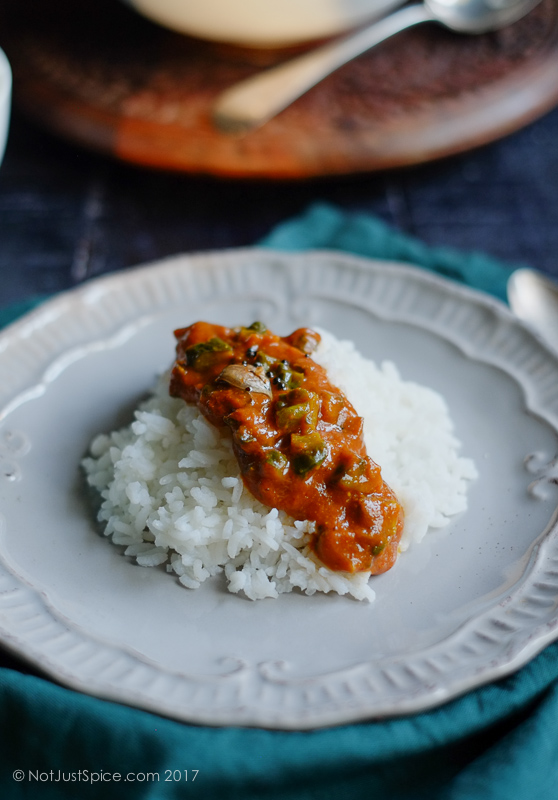
Now, bitter gourd may not be your favourite vegetable, it may not even be a vegetable you like, but when you eat it this way — kanchala gojju | hagalakayi gojju | khatta meetha karela | bitter gourd curry — with rice or chapatis, you’ll love the riot of sweet, tangy, spicy, bitter, salty and umami tastes in your mouth. Oh yes, you read it right — it is packed with oodles of flavour, and is a great way to make your kids eat bitter gourd.
Before I proceed further, let me tell you why there are three names in the title. Kanchala gojju is the Tulu term, hagalakayi gojju is the Kannada term, khatta meetha karela is the Hindi term, and of course bitter gourd curry is the rough translation of those two terms. I use rough translation because curry encompasses an extensive range of gravies, sauces, chutneys, saarus, gojjus, kulambus, yakhnis, and so on; curry is usually used outside of India. Gojju is thicker than a saaru (the consistency of a gravy), but thinner than chutney. Kanchala gojju is a staple in many Tulu and a few Kannada households, and is usually served in between courses as a palate cleanser.
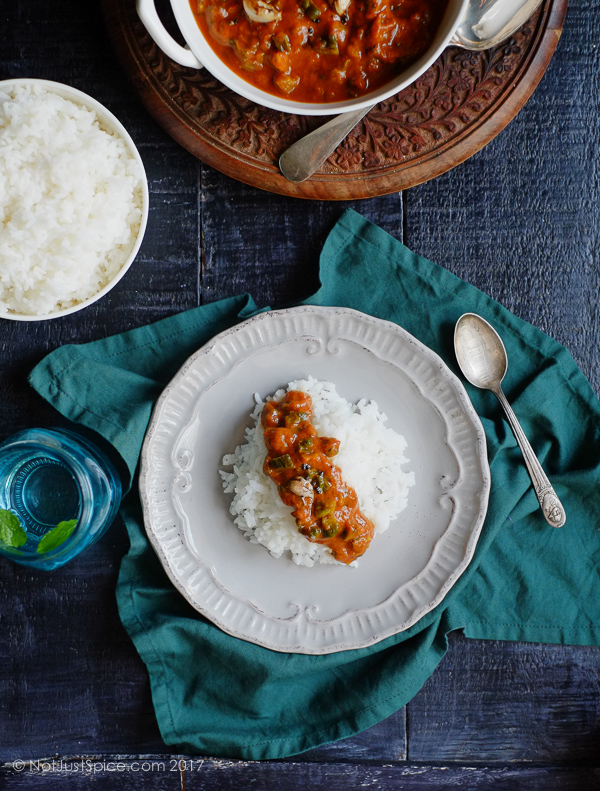
Just like how flamenco is not only about the dance but also the singing, the guitar playing, the vocals, the handclapping, and the finger snapping, hagalakayi gojju is not only about bitter gourd — it is how all these flavours come together to form a potent yet lovely curry. Its form may vary from household to house hold, and the bitter gourd curry recipe you’ll find below is from ours, and is a speciality that my mother in law makes once in a way (thanks to the steely determination of the better half to not touch anything that has bitter gourd in it). I like it though, and I’m happy I get to eat more of it!
Until I asked her for the recipe, I did not know that my mother in law spent quite a bit of effort to get the ingredients ready, and more making it! And I think that’s why it turns out great every single time. Fiery red (only in colour because of the Byadagi chilli used; it doesn’t indicate the heat), full-flavoured, and extremely beneficial to your body — this bitter gourd curry teases and sates, and is intense and proud.

If you have not eaten bitter gourd until now, then this is a great way to get introduced to this mighty vegetable. Also known as bitter melon, bitter squash and balsam-pear, bitter gourd originated in India before being introduced to China. The variety we use in India is native to India and is known here in as many names as there are languages I guess. So you’ll find that people call it karle in Marathi, paagarkaai or pavakai in Tamil, karela in Hindi, karate in Konkani, and uchchhey in Bengali (kanchala in Tulu and hagalakayi in Kannada). Bitter gourd has for long been used in traditional medicine and is a great for fighting problems related to the gut. According to this article, bitter gourd is great source of vitamins, magnesium, folate, zinc, phosphorus, manganese, iron, and high dietary fibre. It contains twice the beta-carotene of broccoli, twice the calcium of spinach, and twice the potassium of a banana, according to Health.com.
A saying in Tulu goes thus: Kanchala itthunda enchala unoli, which means if you have bitter gourd you can dine well. Happy dining! And don’t forget to tag me on Insta, Facebook, or leave a comment below.
Related Links:
Momordica charantia (Bitter Gourd on Wikipedia)
5 benefits of eating bitter gourd… blood purification (INDIA TODAY)
Cuisine of Karnataka (Wikipedia)
Byadagi Chilli (Wikipedia)
5 Easy Tips To Remove Bitterness From Bitter Gourd (NDTV FOOD)
Ingredients
Instructions
- 1Wash then slice the bitter gourd into (1/2 cm wide) circles, then quarter them. Remove the seeds. You could also blitz them in the food processor - but first slice them lengthwise and remove the seeds.
- 2Parboil the bitter gourd with 1/2 teaspoon salt, to reduce the bite of the bitterness.
- 3While the water boils, roast the coriander seeds, raw rice, split black gram, green gram, split chickpea, poppy seeds, 1/4 teaspoon mustard, cumin seeds and onion one at the time. Take care while doing so as the poppy seeds and split black gram burn soon. Let the onions roast for long till they are light golden.
- 4Grind them with half a cup of water finely.
- 5Add the ground mixture to a heavy-bottomed pan, add 1 cup of water and allow it to come to a boil. Cook for 10 minutes — do not put a lid on.
- 6Add the parboiled bitter gourd, and the remaining salt, and keep the heat on until it is cooked — about 5-7 minutes.
- 7Now powder the jaggery and add it to the boiling bitter gourd gravy 2 minutes before you are ready to turn off the heat. You must add it in the end or the gravy becomes very sticky.
- 8In a small frying pan, add the coconut oil, and when it is hot, add the remaining mustard seeds.
- 9After the crackle, add the garlic and turn of the heat as they begin changing colour and you get that smoked garlic smell.
- 10Add the sesame seeds right after you turn of the heat as they tend to turn brown soon.
- 11Empty this tempering into the gravy and mix.
- 12Serving: Let the haagalakaayi gojju rest for 15 minutes before you serve it with hot rice, or neer dosas, or chapatis. A little will go a long way!